


How Long Does a Petrol Car Battery Last?
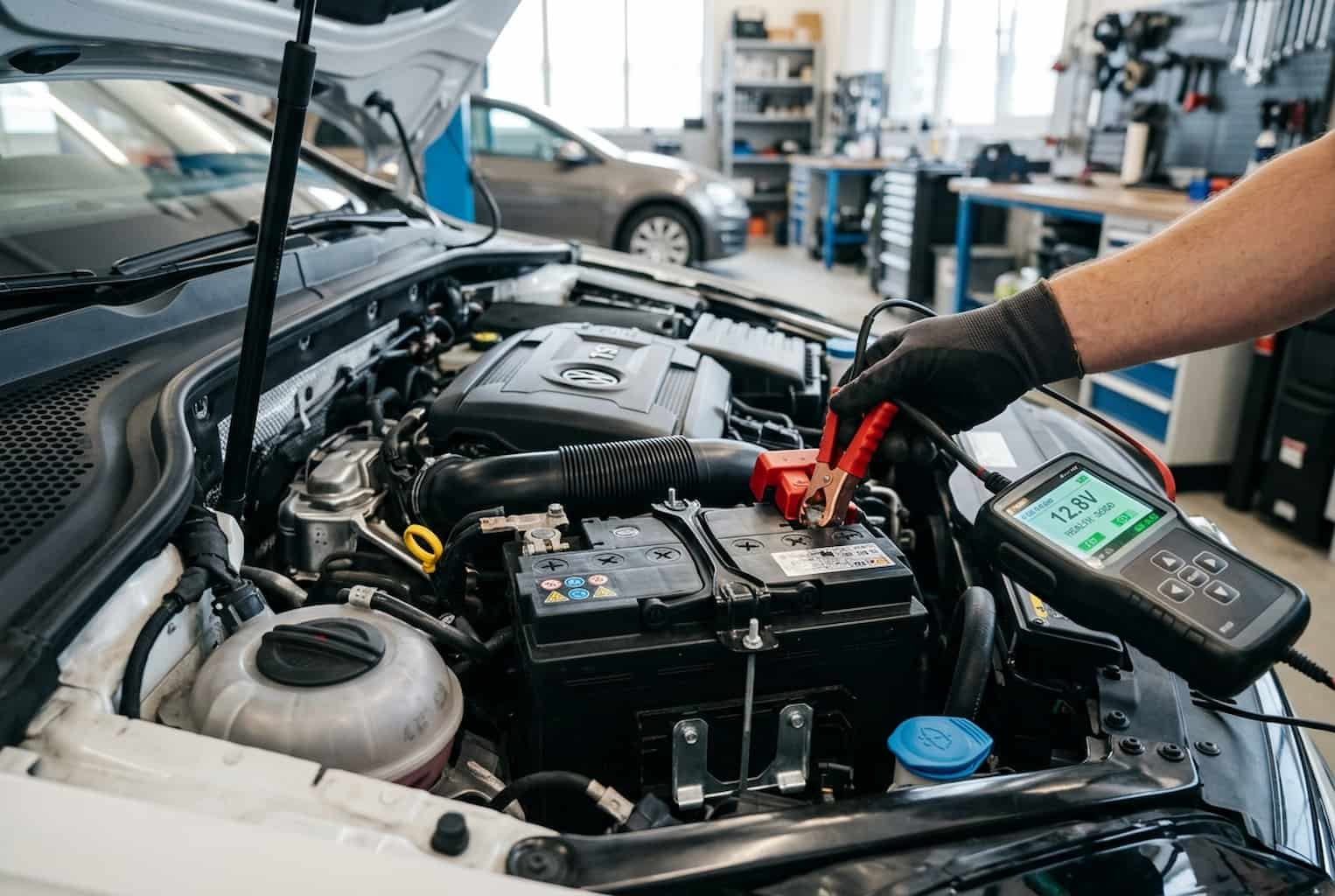
A petrol car battery usually lasts between 3 and 5 years, although a good-quality, well-maintained battery can last longer. Its lifespan depends on the climate, how often you drive, the type of journeys you make, the condition of the charging system and the number of engine starts.
The battery is one of those components we pay little attention to until the car won’t start. However, it rarely fails overnight: it usually loses capacity gradually and shows small warning signs before it dies completely.
In petrol cars, the battery mainly supplies the energy needed to start the engine and power certain electrical systems. Knowing how long it can last and which habits speed up its wear helps you avoid being stranded at the worst possible moment.
How long does a petrol car battery last and what does it depend on?
As a general guide, the starter battery of a petrol car lasts roughly 3 to 5 years. However, there is no exact date when it must be replaced.
Some can last more than five years in good conditions, while others start causing problems earlier because of the climate, heavy city driving or long periods without using the car.
Factors that affect battery life
The main factors that determine its lifespan are:
- The quality and type of battery fitted.
- The temperatures it is exposed to.
- How often you use the car.
- The number of engine starts per day.
- The usual length of your journeys.
- The consumption of electrical systems.
- Whether the alternator works properly.
- Whether the car has a Start-Stop system.
Why the way you use your car can shorten battery life
Age is not the only thing that matters. Two batteries fitted on the same day can last very different lengths of time depending on how each car is used.
Short journeys
Starting the engine takes a significant amount of energy. Once it is running, the alternator gradually recovers part of that charge.
If you only use the car for very short trips, you may switch off the engine before the battery has had enough time to recover the energy used to start it.
If this pattern repeats every day, the battery may routinely run below its optimum charge level and wear out sooner.
Long periods without using the car
Even with the car switched off, some systems keep drawing a small amount of power, such as the alarm, central locking, control units or connectivity systems.
That is why leaving a car parked for weeks can flatten the battery, especially if it is several years old or was not fully charged.
High temperatures
Extreme temperatures directly affect batteries. Although many drivers associate starting problems with winter, high heat also speeds up internal deterioration.
In warm areas such as Málaga and the Costa del Sol, regularly leaving the car in the sun for many hours can contribute to battery ageing.
Whenever possible, parking in a garage or in a shaded area helps reduce this heat stress.
How long it lasts depending on the battery type
Not all petrol cars use exactly the same technology. The electrical equipment and systems such as Start-Stop determine which battery should be fitted.
| Battery type | Typical use | Approximate lifespan | Features |
|---|---|---|---|
| Conventional lead-acid | Cars without Start-Stop | 3–5 years | The usual option in conventional cars |
| EFB | Cars with basic Start-Stop | About 4–6 years | Withstands more charge and discharge cycles |
| AGM | Advanced Start-Stop and high electrical demand | About 4–6 years | Greater resistance to intensive charging cycles |
These periods are only a guide. An AGM battery used in poor conditions can also last less than a properly maintained conventional battery.
Also, if the manufacturer states that the car needs an EFB or AGM battery, it is not a good idea to replace it with a conventional one just to save money.
How to tell if the battery is reaching the end of its life
A worn battery often gives warnings before it fails completely. Some signs are particularly easy to spot when starting the car and using the electrical systems.
The engine takes longer to start
One of the most common signs is that the starter motor turns with less force than usual. If the car takes longer to start or needs several attempts, the battery may be losing capacity.
Dimmer lights and electrical systems
The lights may dim briefly when starting and some electrical systems may behave erratically when the battery can no longer deliver the energy needed.
The Start-Stop system stops working
In many cars, the Start-Stop system switches off automatically when it detects that the battery charge is not enough to guarantee further starts.
The battery goes flat frequently
If the car’s battery goes flat after standing for only a few days, it is worth checking its condition and also ruling out abnormal power drain or an alternator fault.
Not all of these symptoms necessarily mean the battery needs replacing. A faulty alternator, damaged connections or abnormal electrical consumption can cause similar problems.
How long can the battery last if the car is not used?
There is no number of days that applies to every car. It depends on the condition of the battery, the electrical consumption at rest and the car’s technology.
A new, properly charged battery will cope better with a period of inactivity than one that is four or five years old.
If the car will be parked for several weeks, it may be a good idea to use a battery maintainer compatible with the vehicle.
In modern cars, you should not disconnect the terminals without first checking the manual or asking a professional, as some electronic systems may require specific procedures.
How to extend the life of a petrol car battery
A few simple habits can help reduce premature wear.
Avoid making only very short trips
After each start, the alternator needs some time to recover the energy used. Chaining trips of just a few minutes can prevent the battery from properly recovering its charge.
Don’t overuse electrical systems with the engine off
Lights, the infotainment system and other devices can draw power directly from the battery when the engine is not running.
Protect the car from extreme temperatures
Intense heat speeds up the internal ageing of the battery. Whenever possible, parking in a garage or a sheltered area can help reduce this wear.
Check the terminals and the charging system
The terminals should be securely fastened and free from corrosion. In addition, even a new battery can go flat quickly if the alternator or another part of the charging system is faulty.
Always fit a compatible battery
Capacity, cold cranking current, dimensions and technology must match the manufacturer’s specifications.
Do petrol and diesel cars use the same battery?
The batteries in both types of car work on the same principle, but their specifications may differ.
Diesel engines usually need more starting power because they run at higher compression ratios and may also power the glow plugs before starting.
A petrol car usually needs less initial effort, but that does not mean it can use any battery.
Capacity, cold cranking current, dimensions and technology must be those specified for each vehicle. That is why you should never choose a battery just on price or because it physically fits in the space available.
What happens if the battery goes flat?
A one-off discharge does not necessarily mean the battery needs replacing. What to do depends on the cause and on the battery’s previous condition.
If you left the lights on
If the battery was in good condition and the discharge was caused by a one-off drain, a jump start followed by a proper recharge may be enough.
If it goes flat again a few days later
When the problem keeps happening, it is worth checking the battery, the alternator and any power drain with the car switched off.
A recurring discharge should not be solved simply by jump-starting the car every time.
If the battery is already several years old
When a battery that is three, four or more years old starts going flat frequently, it may be a sign that its capacity is falling and it is nearly time to replace it.
When should you replace the battery?
Age alone should not be the only criterion. A four-year-old battery that still performs well can keep working, while a newer one may have suffered premature wear.
From three or four years onwards, it is advisable to pay more attention to how the car starts and to have the battery checked regularly.
If you notice repeated starting difficulties or a professional test shows a significant loss of capacity, replacing it before it fails completely can stop you from being stranded.
Fuel and maintenance: two different aspects of car care
The battery is part of the electrical system and its lifespan does not depend directly on whether you use 95 or 98 petrol. However, both proper maintenance and using the fuel recommended by the manufacturer are part of looking after your car.
At Lisbona Oil “El Visillo” we have eight pumps with 95 petrol, 98 petrol, micro-filtered Premium Diesel and AdBlue®, with staffed service throughout a long daytime schedule and automatic self-service.
If you are looking for a petrol station in Torre del Mar, you can check our location and services before you come to fill up.
You can also learn more about fuel types in our guide What is catalysed petrol and what is it for.
Services for diesel vehicles and professionals
Although this article focuses on petrol cars, at Lisbona Energía we also serve companies, residential communities, farms and professionals that use diesel vehicles and machinery.
We offer diesel delivery in Malaga, supplying fuel directly at the customer’s premises.
For fleets and vehicles fitted with SCR systems, we also offer AdBlue home delivery, avoiding unnecessary trips and making supply easier to manage.
In summary: how long does the battery really last?
A petrol car battery usually lasts between 3 and 5 years, although there is no exact expiry date. A good battery, correctly sized and used in favourable conditions, can last longer.
Very short trips, extreme heat, long periods of inactivity, a faulty charging system and high electrical consumption can considerably shorten its life.
Rather than waiting for the car not to start, it is worth paying attention to the first signs of wear and having the battery checked regularly once it is several years old.
Frequently asked questions about petrol car batteries
Do I need to replace both batteries if my petrol car has an auxiliary system?
Not necessarily. Some cars have a main battery and an auxiliary battery for certain electrical systems. Each one should be checked individually and replaced only when its condition requires it, always following the manufacturer’s specifications.
Where should I take a used car battery?
Used batteries must not be thrown away with household waste. They should be taken to a garage, an authorised outlet or a collection point that accepts this type of waste so that the materials can be properly handled and recycled.
Will a more powerful battery make the car start better?
Not necessarily. The battery must meet the capacity, cold cranking current, dimensions and technology specified for the vehicle. Fitting a battery with different characteristics without a technical reason does not guarantee better performance and may cause incompatibilities.
Does the car need to be programmed after replacing the battery?
It depends on the model. Some modern cars have battery management systems that require the new unit to be registered or electronically adapted after replacement. Check the manufacturer’s manual or have the battery changed at a garage if your car uses this system.
