


What Is Catalysed Petrol and What Is It For?
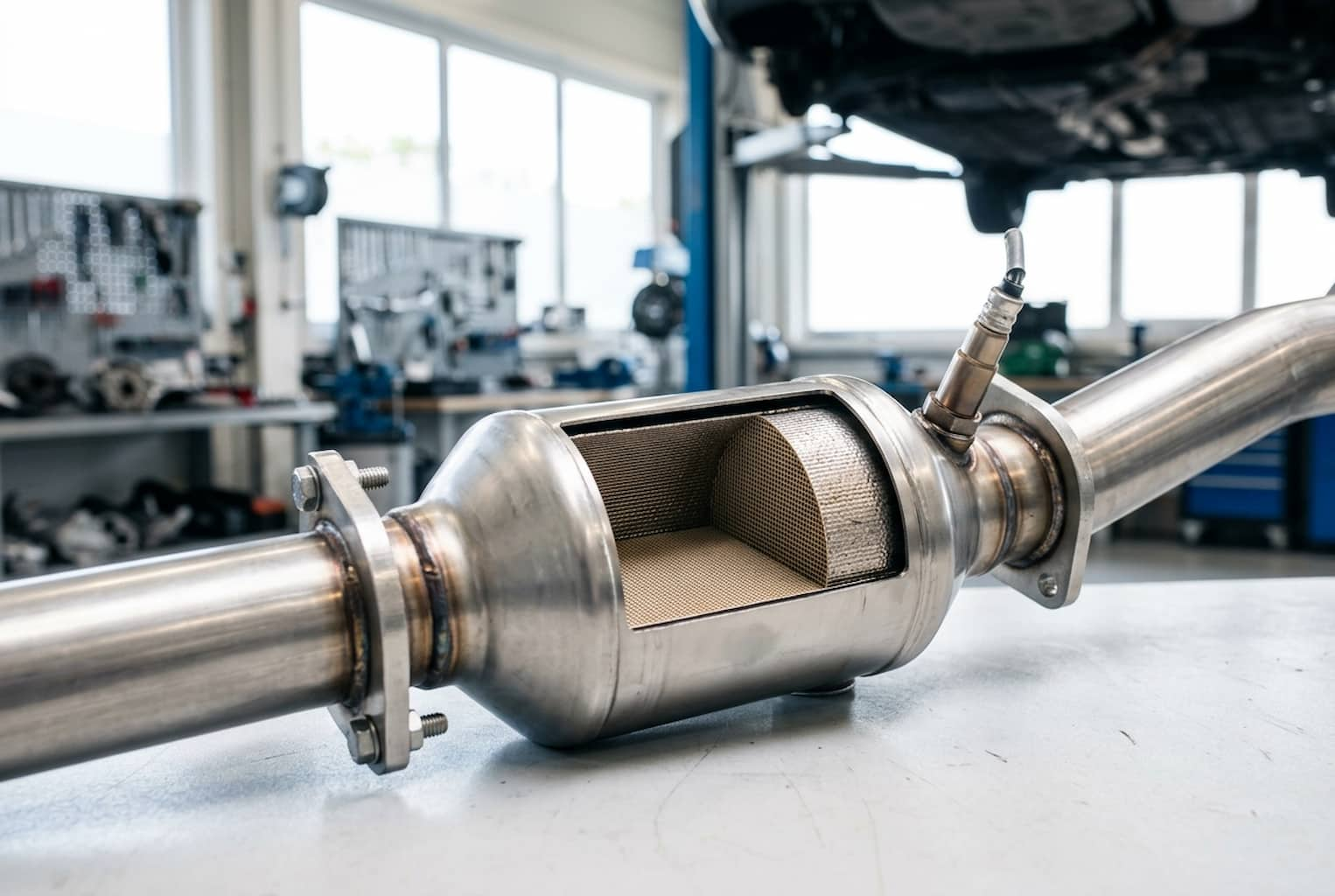
It is one of the most common questions among drivers: they hear about “catalysed petrol” and think it is a different fuel from the one they usually buy. The reality is simpler: all petrol sold in Spain today is catalysed. You don’t need to ask for it specially or look for a particular pump. Any unleaded 95 or 98 petrol is suitable for cars with a catalytic converter.
In this article we explain, from our experience as a filling station, exactly what catalysed petrol is, how it differs from the petrol used in the past, how a car’s catalytic converter works, what it means for vehicle maintenance and what to bear in mind if you drive a classic car built before the 1990s.
What exactly is catalysed petrol?
Catalysed petrol is unleaded petrol formulated specifically for vehicles with a catalytic converter. The name refers to the fuel’s compatibility with this anti-pollution system, not to any special chemical treatment of the fuel itself.
The term became popular in the 1990s, when two types of petrol were sold side by side at Spanish filling stations:
- Leaded petrol (the old “super” or “normal”), for older vehicles without a catalytic converter.
- Unleaded petrol (popularly called “catalysed” or “unleaded”), for modern vehicles with a catalytic converter.
Leaded petrol has been completely banned in Spain since 1 January 2002, following European Directive 98/70/EC. That is why any petrol you find at the pump today (95 or 98) is automatically catalysed. Although technically correct, the term is a little outdated: talking about “catalysed petrol” in 2026 is like talking about “colour television”.
What was non-catalysed petrol and why did it disappear?
What non-catalysed petrol was
Non-catalysed petrol was petrol containing tetraethyl lead, an additive used in fuel since the 1920s for two main purposes:
- To increase the octane rating (improving resistance to engine knock).
- To lubricate the engine valves, especially non-hardened exhaust valve seats.
For decades it was the standard fuel for all petrol cars. In Spain it was sold as “super” (higher octane) or “normal” (lower octane).
Why it disappeared
Lead is a highly toxic heavy metal. Its emissions cause serious public health problems (neurological damage, especially in children) and pollute the air, soil and groundwater. From the 1970s, different countries began to require its gradual phase-out.
But there was a second, more technical and decisive reason: lead destroys the catalytic converter. When exhaust gases containing lead pass through the converter, the metal is deposited on the surface of the precious metals (platinum, palladium, rhodium) and makes them chemically useless. This is known as “catalyst poisoning”. A single tank of leaded petrol can ruin a catalytic converter for good.
That is why the widespread introduction of catalytic converters in the 1990s meant lead had to be removed from petrol at the same time. In Spain the process was gradual until the total ban in 2002.
Catalysed or non-catalysed petrol: how to know which your car needs
The answer is simple: all current cars use catalysed petrol, as it is the only kind available. If your car was built from 1993 onwards, it has a catalytic converter as standard and runs correctly on the 95 or 98 petrol you find at any filling station.
There are only two situations where doubts make sense:
- Cars built before 1990. Many older models were designed for leaded petrol. Now that this fuel has disappeared, owners of classic cars need to take specific measures (lead-replacement additives, valve adaptation or fitting an approved catalytic converter).
- Cars imported from countries where leaded petrol is still sold. These are very exceptional cases, as most countries have followed the European approach.
Apart from these specific cases, the petrol you put in your car is, by definition, the right one.
How a car’s catalytic converter works
The catalytic converter is a device fitted in the vehicle’s exhaust system whose job is to reduce the polluting gases produced during combustion before they are released into the atmosphere. Inside, it has a honeycomb ceramic structure coated with a thin layer of precious metals:
- Platinum: catalyses the oxidation of unburnt hydrocarbons.
- Palladium: helps oxidise carbon monoxide (CO).
- Rhodium: reduces nitrogen oxides (NOx), turning them into harmless nitrogen.
These metals act as chemical catalysts: they speed up reactions that would not otherwise happen at normal exhaust temperatures. The result is that three main pollutants (CO, HC and NOx) are transformed into much less harmful compounds (CO₂, H₂O and N₂).
To work effectively, the catalytic converter needs to reach an operating temperature of between 400 and 800 °C. On very short urban trips the engine does not always reach this temperature, which reduces its effectiveness. This is one of the reasons why short trips with a cold engine are particularly polluting.
The system is completed by the lambda sensor (or oxygen sensor), which measures the oxygen in the exhaust gases. With this information, the engine control unit constantly adjusts the air-fuel mixture to optimise both fuel consumption and the converter’s performance.
History of the catalytic converter in Spain
The introduction of the catalytic converter in Spain followed a clear timetable set by European regulations:
- 1989: mandatory for petrol cars with engines over 2 litres.
- 1993: mandatory for all new petrol cars, regardless of engine size. This coincided with the entry into force of the Euro 1 standard.
- 1997: mandatory for diesel vehicles, with oxidation catalysts specific to this type of engine.
- 2002: total ban on leaded petrol in Spain.
- 2005 onwards: introduction of additional systems such as diesel particulate filters (DPF) in diesel cars and advanced three-way catalytic converters in petrol cars.
Each new European standard (Euro 1, 2, 3, 4, 5, 6 and now Euro 7 in 2026) has tightened emission limits, forcing manufacturers to improve their emission control systems.
All petrol today is catalysed: so what is the difference between 95 and 98?
If both are catalysed, many drivers wonder why there are two types of petrol at the pump. The answer lies in the octane rating, which measures the fuel’s resistance to knock (self-ignition) in the engine:
- 95 petrol (RON 95): the most common. Suitable for the vast majority of today’s cars.
- 98 petrol (RON 98): greater resistance to knock. Recommended by some manufacturers for high-performance or high-end turbocharged engines.
Both are unleaded and compatible with catalytic converters. The technical difference is the octane rating, not the presence or absence of lead. Using 98 in a car that only needs 95 does not bring significant performance benefits unless the manufacturer specifically recommends it.
Classic cars: what to do if your car needed leaded petrol
If you drive a car built before (roughly) 1990, it very probably used leaded petrol originally. As this fuel is no longer sold, you have three options:
Lead-replacement additives
There are commercial additives that you add to the tank every time you fill up and that take over the lubricating role of lead (protecting the valve seats from premature wear). This is the cheapest and most practical solution for occasional use of classic cars.
Mechanical adaptation of the engine
This involves replacing the engine’s valve seats with hardened versions that do not need lead lubrication. It is a job for a specialist garage at a moderate cost, but it leaves the engine ready to run on unleaded petrol without additives.
Fitting a catalytic converter and modernising
In some classic cars a retrofit catalytic converter can be installed and the system adapted. It is the most complex and expensive option, but it allows the car to meet modern environmental requirements if it is used frequently.
Consequences of removing or tampering with the catalytic converter
Some people believe that removing the catalytic converter gives more power and a sportier sound. The reality is different and the consequences are serious:
- It is illegal. Article 11 of Spain’s General Vehicle Regulations prohibits tampering with anti-pollution systems. Fines can exceed €500.
- Guaranteed MOT (ITV) failure. The technical inspection checks emissions and immediately detects the absence of a working catalytic converter.
- A drastic increase in emissions of CO, NOx and hydrocarbons, with a direct impact on air quality.
- Engine damage in the medium term due to mismatches with the lambda sensor and the engine control unit.
- A lower resale value for the vehicle.
If your catalytic converter is damaged, the right solution is to replace it. Prices are around €80–120 for universal versions and up to €500 for original converters. Although universal ones are cheaper, they usually have a shorter life. Any replacement must comply with current regulations to pass the ITV.
Quality micro-filtered fuel in Torre del Mar
As a filling station in the Axarquía area, at Lisbona Oil “El Visillo” we offer 95 and 98 petrol (both catalysed, of course) together with micro-filtered Premium Diesel and AdBlue®, all to the same quality standard. Our fuel goes through special filters before it reaches the pump, ensuring clean fuel free of impurities that is kind to the catalytic converter and the rest of the engine’s systems.
Fuel quality has a direct effect on the life of the catalytic converter and the engine. Fuel with impurities can speed up the ageing of the anti-pollution system, increase consumption and cause sensor faults. Using micro-filtered fuel makes a real difference in the long run.
As well as filling up at the pump at our petrol station in Torre del Mar, we offer additional services for professional and private customers with specific needs: diesel delivery in Malaga, delivered straight to your site, farm or business, and AdBlue home delivery for Euro 6 diesel fleets and industrial machinery.
⛽ Need diesel without wasting time on trips?
We deliver top-quality micro-filtered diesel straight to wherever you need it. Malaga and Granada.
And if you have questions about other technical aspects of refuelling that often cause confusion, we also recommend our article on what happens if you put petrol in a diesel car and what to do, where we cover another of the most common mistakes at the filling station.
Frequently asked questions about catalysed petrol
Can I mix 95 and 98 petrol in the tank?
Yes, no problem. Both are unleaded petrols compatible with catalytic converters; the only difference is the octane rating. When mixed, the result is a petrol with an intermediate octane rating that will not damage the engine or the converter. It is common practice when a driver switches type of petrol and there is no need to run the tank empty first.
Does a car with a catalytic converter use more fuel?
Slightly. The catalytic converter adds a small restriction to the flow of exhaust gases, which can mean a marginal increase in consumption (usually less than 2%). This increase is more than offset by the environmental benefits of the system. Modern converters are designed to minimise this loss.
What happens if I make lots of short trips?
Very short urban trips do not allow the catalytic converter to reach its optimum operating temperature (400–800 °C), which reduces its effectiveness and increases wear. In the long term, this can cause premature ageing of the system, higher emissions and a greater risk of breakdowns. We recommend combining short trips with at least one 20–30 minute drive of continuous driving each week.
How do I know if my car’s catalytic converter is failing?
The most common symptoms are: a noticeable loss of power, higher fuel consumption, a strong rotten-egg smell from the exhaust (hydrogen sulphide), dark smoke, a metallic rattle under the car, starting difficulties and the engine warning light coming on. If you notice any of these symptoms, take the car to a garage for diagnosis. A damaged converter that is not repaired can cause serious faults in other engine components.
