


Electric Car Chargers: Types, Speeds and Which to Choose
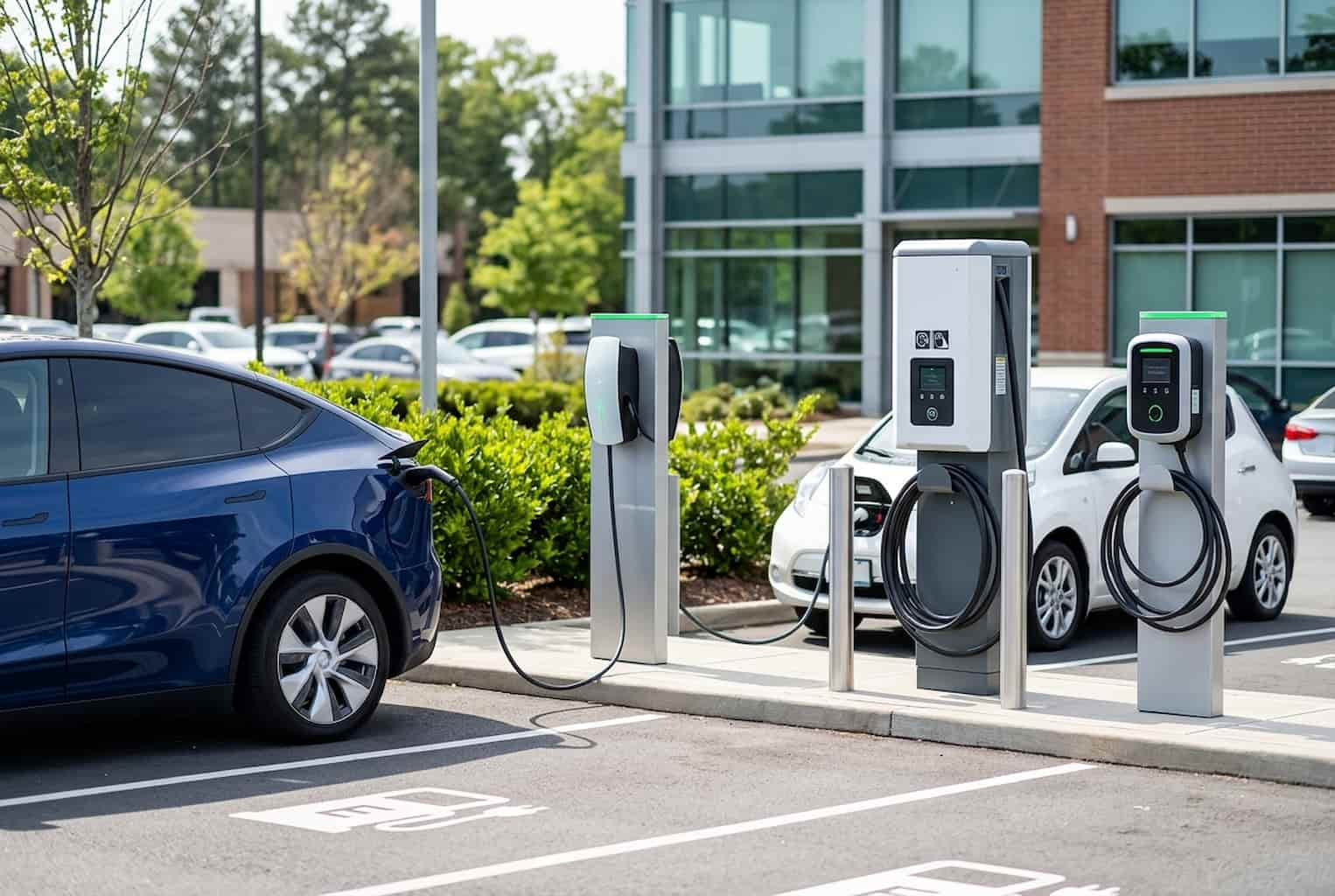
At Lisbona Energía we help you choose the right charger for your installation. Not all electric car chargers are the same: there are fundamental differences in technology, speed and where they are used. Understanding the types will help you decide which one to install at home and which ones you will find on the street. This guide explains the real differences between AC and DC chargers, the connectors your car needs, and how to choose the charging speed that best suits the way you drive.
What is the difference between AC and DC chargers?
AC (alternating current) chargers send grid electricity to the car, which converts it internally into what the battery needs. They are safer, cheaper to install and perfect for home use. DC (direct current) chargers skip that internal conversion: they convert the electricity before sending it to the car, which allows much faster charging. The trade-off is that DC chargers are expensive, need special infrastructure and are only found at public rapid-charging stations.
AC chargers: ideal for home and everyday use
A home AC charger (wallbox) takes electricity from your 220 V or 400 V supply and sends it to the car through the charging cable. They are safe, quiet and can stay connected all the time. Typical speeds are 3.7 kW (slow charging, 12–15 hours), 7.4 kW (standard, 6–8 hours) or 11–22 kW (fast, 1–3 hours). The speed depends on your electricity contract and on what your car can accept.
DC chargers: for fast charging on long journeys
The DC chargers you see on motorways and public networks run at 50 to 350 kW, charging batteries from 20% to 80% in 20–45 minutes. They are ideal for long trips, but not for daily use at home: they would draw too much power and the installation would cost tens of thousands of euros. In addition, rapid DC chargers degrade the battery more over the long term if used constantly.
Connectors: Type 2, Type 1 and CCS
The connector is the physical plug that links the cable to the car. In Europe the current standard is Type 2 (the one with two larger circles), which you will find on almost every new electric car. Older cars may have Type 1 (smaller, rare in Europe) or CCS (which combines AC and DC in one connector). With an adapter you can use other connectors, but it is always better if yours is natively compatible.
| Charger type | Technology | Speed | Typical use |
|---|---|---|---|
| Slow AC | Alternating current, 3.7 kW | 12–15 hours (0–100%) | Occasional home socket |
| Standard AC | Alternating current, 7.4 kW | 6–8 hours (0–100%) | Home, garage, office |
| Fast AC | Alternating current, 11–22 kW | 1–3 hours (0–100%) | Public car parks, shopping centres |
| Ultra-fast DC | Direct current, 50–350 kW | 20–45 minutes (20–80%) | Motorways, long journeys |
Which one should you choose?
If you drive less than 200 km a day and have a garage, a 7.4 kW AC wallbox is enough and saves you money. If you make longer trips or want faster charging, go up to 11–22 kW if your electricity contract allows it. You will not install a DC charger at home, but it is good to know they exist when you plan long journeys.
Frequently asked questions about charger types
What does kW mean on a charger?
kW is the power: the more power, the faster the charge. A 7.4 kW charger charges roughly twice as fast as a 3.7 kW one. The maximum power depends on your electricity contract and on what your car can accept.
Can fast chargers damage my battery?
Rapid DC chargers wear the battery slightly if used very often (daily). For occasional use on trips, it is not a problem. For daily charging, a medium-power AC charger that puts less strain on the battery is better.
Is my car compatible with all connectors?
No. Each car has a native connector. With adapters you can use others, but you lose convenience and speed. Ideally, your wallbox should have the connector your car uses natively.
If you want to know more about how to install an EV charging point at home, we have a complete guide covering all the paperwork, or contact us for more information.
