


As a guide, every 5 to 10 years for a home tank, or sooner if you notice water, sludge or boiler faults. Old tanks, tanks that are often left almost empty and tanks exposed to the weather usually need it sooner.
How to Clean a Heating Oil Tank Step by Step
Updated:
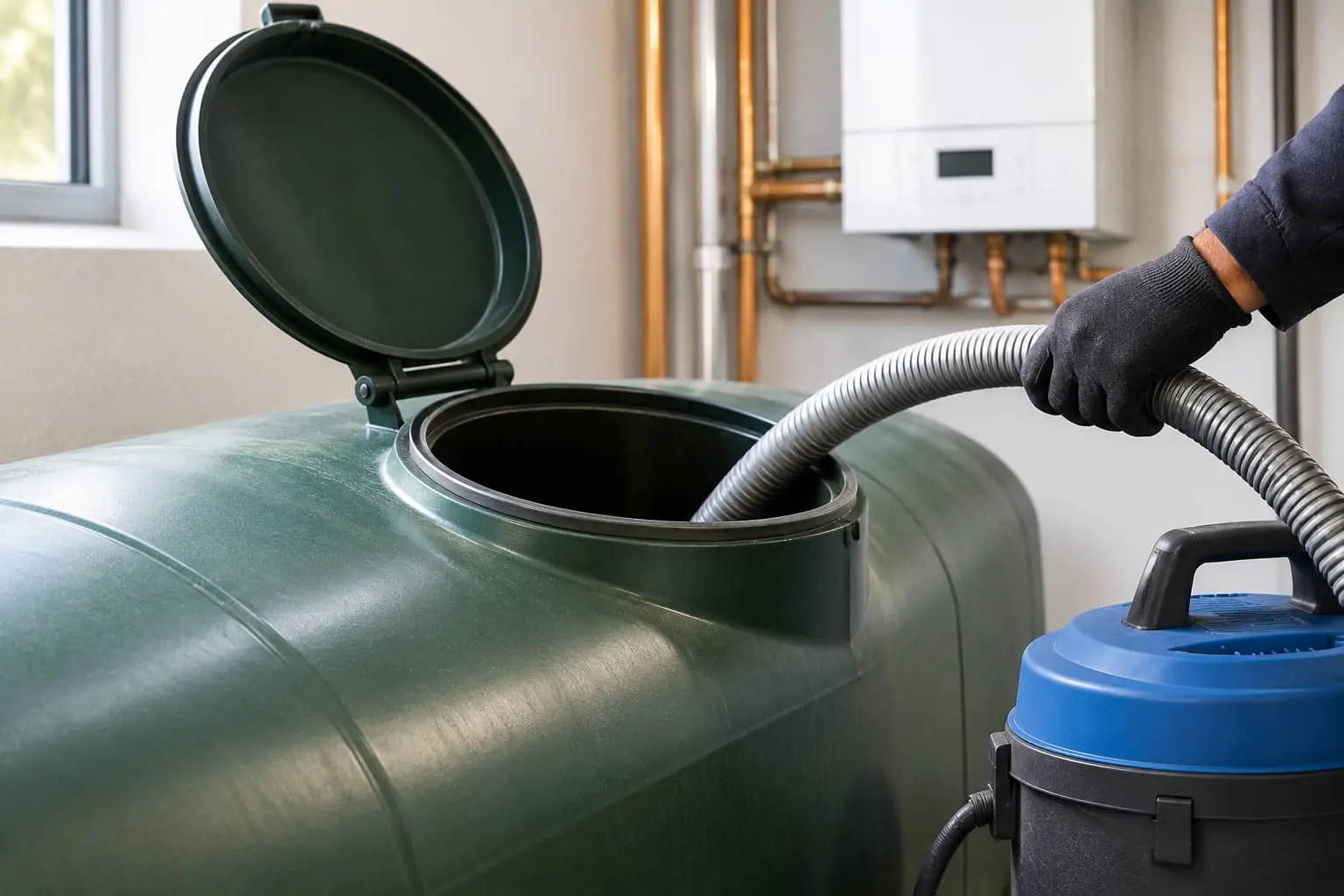
In short: over the years, water, sludge and microbes build up at the bottom of a heating oil tank, clogging filters and damaging the boiler. Clean it every 5 to 10 years, or sooner if you see warning signs. The job involves pumping off and filtering the oil, removing the water and sludge, cleaning and drying the inside and taking the waste to an authorised waste manager. Never climb into a tank: for large or underground tanks, use a specialist company.
The oil tank is the part of a heating system nobody thinks about until the boiler starts failing. A dirty tank means blocked filters, failed starts and burner breakdowns. Many villas and country houses in the Axarquía and inland Málaga still heat with oil, often in homes that stand empty for months. This guide explains how to clean a heating oil tank, how often to do it and how to keep it clean.
Why do you need to clean a heating oil tank?
Even if the oil goes in clean, three kinds of contamination build up at the bottom of the tank over time.
Water from condensation
The air drawn in through the vent carries moisture. When the tank cools, that moisture condenses on the walls and runs to the bottom. Water is heavier than oil, so it settles at the bottom, right where the suction pipe usually is.
Sludge and sediment
Rust from metal tanks, dust and residues from ageing fuel form a dark sludge at the bottom. In an old tank this layer can be several centimetres deep.
Bacteria and fungi
Microorganisms grow where water and oil meet and form a jelly-like mass. It clogs filters very quickly and speeds up corrosion in metal tanks.
What it does to the boiler
All that dirt ends up in the filter, the pump and the burner nozzle. The result is more breakdowns and worse efficiency. To understand where the fuel goes, see how a diesel boiler works.
Signs your tank is contaminated
- The oil filter gets dirty or fills with water after a short time.
- The boiler locks out or struggles to start, especially when the tank is low.
- Darker smoke or a bad smell from combustion.
- Oil drawn from the drain valve looks cloudy or has particles in it.
- The dipstick with water-finding paste changes colour at the bottom.
If the boiler keeps failing with a clean tank, check your oil boiler maintenance too.
How often should you clean a heating oil tank?
There is no fixed figure for homes, because it depends on the tank and how it is used. These are the usual guidelines:
| Situation | Suggested frequency |
|---|---|
| Indoor tank in good condition, normal use | Every 8-10 years |
| Outdoor tank or one exposed to temperature swings | Every 5 years |
| Old metal tank, or one often left almost empty (e.g. holiday homes) | Every 3-5 years |
| New boiler, new tank or change of use | Before starting it up |
| Water found, blocked filters or repeated faults | As soon as possible |
How to clean a heating oil tank step by step
These steps apply to a small, accessible domestic tank, such as a 1,000-litre tank. Never climb into a tank: it is a confined space with hydrocarbon fumes and not enough oxygen.
1. Pick the right time and switch off the boiler
Ideally do it when the tank is nearly empty, at the end of winter. Switch off the boiler and close the oil supply valve before you start.
2. Prepare the area and equipment
Ventilate the space well and remove anything that could cause a spark or flame. Wear hydrocarbon-resistant gloves and goggles, and put down trays and absorbent material in case of spills.
3. Pump off the usable oil
Use a transfer pump to move the oil from the upper part into approved containers, passing it through a filter. Keep the suction away from the bottom so you do not stir up the sludge.
4. Remove the water and sludge
Pump out the bottom or open the drain valve if the tank has one. Keep the water and sludge in a separate, closed container: they are hazardous waste.
5. Clean the inside
Through the inspection hatch, clean the walls and bottom with a degreaser made for fuel tanks and a long-handled brush or lance. Pump out the residue. Do not use a pressure washer unless you can dry the tank completely afterwards.
6. Dry and inspect
Let the tank dry and air out. Check the vent, suction pipe, level gauge and filter, and replace the filter.
7. Refill and dispose of the waste
Put the filtered oil back and top up with fresh oil. Take the sludge, contaminated water and absorbent material to an authorised waste manager.
Cleaning a car or motorbike tank is a different job: we explain how to clean a gas tank.
Professional cleaning or DIY
| Aspect | DIY | Specialist company |
|---|---|---|
| Type of tank | Small, accessible, above ground | Any, including underground and large tanks |
| Equipment | Transfer pump, filter, degreaser, PPE | Suction and cleaning equipment with gas monitoring |
| Waste | You must take it to an authorised waste manager | The company removes it and gives you a certificate |
| Risk | Spills and fumes if done badly | Low, with trained staff |
Underground tanks, tanks larger than a typical domestic one and tanks that already show corrosion should be cleaned by a specialist. If cleaning reveals damage, replacing the tank is the better option: see our tank installation service.
How to keep your heating oil tank clean
Keep the level up
The more air inside, the more condensation. Avoid leaving the tank almost empty over the summer, which is common in holiday homes, and do not run it right down in winter, when the boiler draws from the bottom.
Check the vent and the cap
A vent without a mesh or a cap that does not close properly lets in rainwater and dirt.
Buy quality oil and use additives if needed
A reliable supplier means less water and sediment going in. If your tank has had bacteria before, you can use a biocide made for diesel fuel. Lisbona Oil offers heating oil delivery across the Axarquía, Málaga and the Granada coast.
Keep track of consumption
Logging what you use helps you plan deliveries and spot unusual usage. We cover the figures in how much a diesel boiler consumes. While you are at it, learn how to bleed radiators before the cold arrives.
Regulations and tank inspections in Spain
In Spain, heating oil tanks are covered by technical instruction MI-IP03, which sets how they must be installed and inspected depending on their capacity and location. We explain it in the regulations for 1000 litre diesel fuel tanks. Cleaning the tank is also a good time to service the boiler: here is how to clean a diesel boiler.
Tank clean and ready to fill?
Order your gasoil at home in Málaga from Lisbona Oil and we will deliver to your house, finca or business.
Heating oil tank cleaning: FAQ
The easiest way is a dipstick with water-finding paste: lower it to the bottom and the paste changes colour where it touches water. Other signs are cloudy oil and filters that clog or fill with water.
The oil from the upper part of the tank can usually be reused if it is filtered properly. The problem is at the bottom, where water and sludge collect. Avoid running the tank right down and clean it when you see signs of contamination.
They are hazardous waste because they contain hydrocarbons. They must not go down the drain or in household rubbish: hand them to an authorised waste manager or to the company that cleans the tank.
At the end of winter, when the oil level is low and the heating is switched off. There is less fuel to remove and the tank is clean for the next winter. If you only spend the winter months in Spain, plan it before you leave in spring.
