


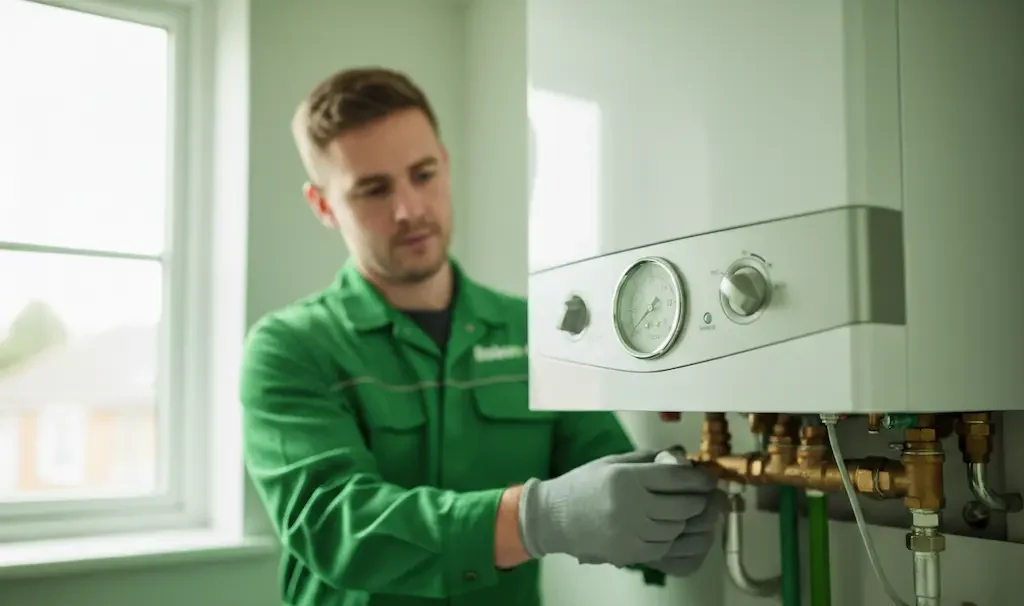
Recommended pressure for domestic boilers
Most gas boilers should have a pressure between 1 and 1.5 bar when cold and up to 2 bar while in operation. If the pressure exceeds 2.5 bar or drops below 1 bar, the system likely needs attention.
These values may vary depending on the manufacturer, but in general, how much pressure should a boiler have falls within this range. Going above or below it can compromise both performance and safety.
Why is it important to maintain the correct pressure?
Balanced pressure allows hot water to circulate correctly throughout the system. If the pressure is too low or too high, the following issues may arise:
- Radiators that don’t heat or heat unevenly.
- Premature wear of internal components.
- Automatic safety shutdowns.
- Risk of leaks due to overpressure.
How to check your boiler’s pressure
To check the pressure, just look at the boiler’s pressure gauge. This meter, usually located on the front or bottom of the unit, shows pressure in bars. Some digital models display it on a screen.
When to check the pressure
- Before starting the heating season.
- After bleeding the radiators.
- If the heating is not working properly.
- After long periods of inactivity.
Increasing pressure when it’s too low
If the pressure is below 1 bar, you’ll need to refill the system. This can be done manually using the filling valve, usually located underneath the boiler. Follow these steps:
- Locate the filling valve (usually a lever or wheel).
- Open it slowly until the gauge reads between 1 and 1.5 bar.
- Close it tightly to avoid overfilling.
Persistently low pressure may indicate a leak or internal loss. In that case, it’s advisable to contact a technician. You can also check out home heating oil delivery services if you need fuel to support your system.
What to do if the pressure is too high
When the pressure exceeds 2.5 bar, there’s a risk that the safety valve will activate or the installation will suffer damage. Common causes include:
- Overfilling the system manually.
- Unbalanced expansion vessel.
- A faulty fill valve left open.
How to reduce the pressure
- Bleed one or more radiators to release water.
- Check the safety valve to ensure it works correctly.
- In persistent cases, request a professional inspection.
Routine maintenance of the boiler
Besides knowing how much pressure a boiler should have, annual preventive maintenance is essential to keep performance optimal:
- Annual checkups by certified professionals.
- Internal cleaning of the hydraulic circuit.
- Checking the expansion vessel, thermostats, and valves.
- Early detection of leaks or deteriorated components.
If you live in areas with high heating demand, you can rely on services such as home heating oil delivery in Málaga or home heating oil delivery in Granada to ensure a constant and efficient supply.
Is it normal for pressure to fluctuate during the day?
Yes, it’s completely normal for pressure to vary depending on the water temperature in the system:
- When cold: pressure slightly drops.
- When hot: pressure increases by up to 25% compared to the starting value.
These variations are normal as long as the pressure remains within limits. If it doesn’t return to normal after cooling, there may be a technical fault.
Best practices for maintaining proper pressure
- Check the pressure gauge at least once a month.
- Don’t tamper with internal components unless qualified.
- Avoid manually overfilling the system.
- Seek professional help for unusual noises, leaks, or fluctuations.
Conclusion
Now that you know how much pressure a boiler should have, you can take control of your heating system safely and efficiently. The typical range is 1 to 1.5 bar when cold and up to 2 bar when hot.
Monitoring pressure, scheduling regular checkups, and working with a reliable technician will help prevent breakdowns and keep your home energy efficient. For more helpful tips, check out our latest post on how to bleed your heating system.
